
Koala AI vs Autoblogging.ai for Bulk Article Generation
You need 50 articles published this week, not another tool comparison that ends in "it depends." Bulk generation is where most AI writers quietly fall apart: the first ten drafts look fine, then structure drifts, internal links vanish, and someone has to rewrite half of them by hand. Choosing between Koala AI and Autoblogging.ai decides how much of that cleanup lands on you.
This article compares both tools specifically for bulk article generation, covering output capacity, workflow, content quality, SEO depth, human review, integrations, languages, publishing, and pricing. By the end you will know which platform fits your volume, budget, and editorial process, and which one to pick.
Quick Verdict: Koala AI vs Autoblogging.ai for Bulk Article Generation
For most bulk article generation needs, Autoblogging.ai is the stronger choice due to its higher output capacity (up to 500 articles per batch) and its specialized Godlike Mode for SEO depth. Koala AI remains a reasonable option for smaller projects, but it trails on scale, SEO tooling, and publishing workflow.
The table below summarizes how the two AI writing tools compare on the factors that matter most for mass content production.
| Factor | Autoblogging.ai | Koala AI (general overview) |
|---|---|---|
| Bulk capacity | Up to 500 articles per batch | Better suited to smaller batches |
| AI modes | 10+ AI modes, including Godlike Mode | Standard generation modes |
| Languages | 35+ languages | Limited language coverage |
| SEO features | SERP competitor analysis, semantic SEO tools, 21-point SEO audit, featured snippet optimization | Basic on-page SEO assistance |
| Publishing | One-click WordPress publish | Manual export or copy-paste |
| Integrations | 35+ integrations | Fewer native integrations |
| Credits | Credits rollover | Varies by plan |
| Support | 24/7 support, new features shipped weekly | Standard support hours |
| Track record | Trusted by 40,000+ content creators, 4.9 average rating, 1M+ articles generated | Smaller user base |
Bulk capacity and pricing. Autoblogging.ai handles up to 500 articles per batch, which suits niche websites, affiliate marketing operations, and agencies running large-scale content automation. Koala AI tends to fit simpler, smaller-scale needs where volume is not the priority.
SEO and workflow. Autoblogging.ai pairs bulk article generation with SERP competitor analysis, semantic SEO tools, a 21-point SEO audit, and featured snippet optimization. It also includes one-click WordPress publish and a human proofreader in all plans, so SEO content moves from draft to live with less manual work.
Recommendation. Choose Autoblogging.ai for high-volume, SEO-focused bulk generation. Its 10+ AI modes, 35+ languages, 35+ integrations, credits rollover, and 24/7 support make it the better fit for serious content operations. Koala AI can work for lighter, smaller-scale projects, but it is not built for the same level of mass content production.
At a glance: how Autoblogging.ai compares to Koala AI, Autoblogging.ai for Bulk Article Generation on the features that matter most.
| Feature | Autoblogging.ai | Koala AI | Autoblogging.ai for Bulk Article Generation |
|---|---|---|---|
| Bulk Article Generation | ✓ | ✓ | ✓ |
What Is Autoblogging.ai?
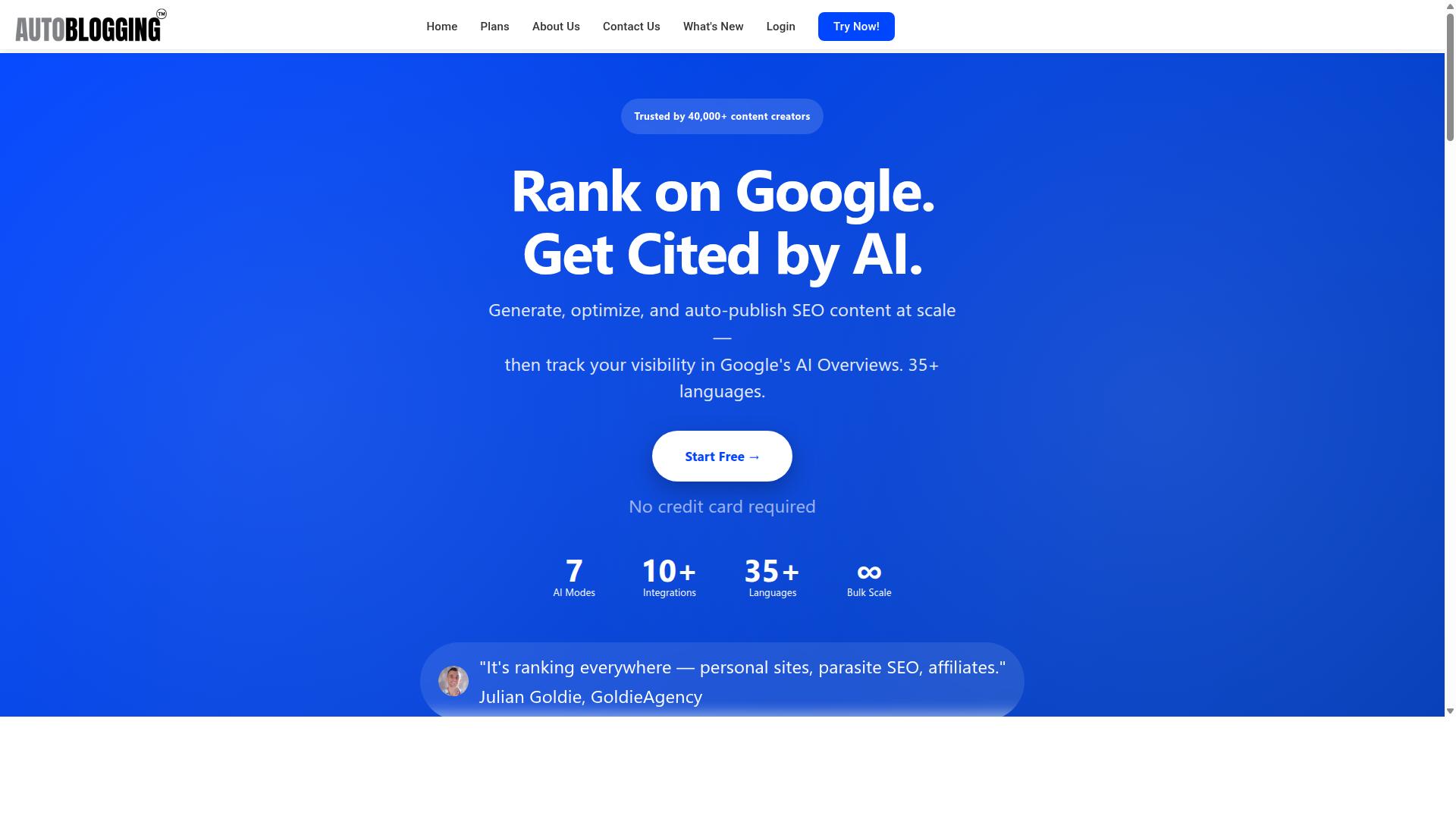
Autoblogging.ai is a product of Digimetriq.com, founded in 2022 by Vaibhav Sharda, that leverages cutting-edge technology to help bloggers, website owners, and agencies save time and improve their online presence. It is an AI article generation platform built for one core purpose: producing content at scale without the usual bottlenecks of manual writing.
Digimetriq's stated mission is to cut down content costs and enable human counterparts in SOPs with the first draft. In practice, that means the platform is designed to slot into existing content workflows rather than replace the people running them. For teams juggling mass content production alongside client work or affiliate projects, that positioning matters.
The tool sits in the same category as other AI writing tools used for bulk article generation, but its focus is narrower than general-purpose assistants. It targets people who need volume: niche website operators, digital marketing teams, and agencies managing multiple properties at once.
Adoption numbers back up that focus. Autoblogging.ai is trusted by 40,000+ content creators, holds a 4.9 average rating, and has generated over 1M+ articles. Those figures reflect a platform that has been used across a wide range of use cases, from single blogs to large portfolios.
Global availability is another defining trait. The platform serves users across different regions and markets, which matters for anyone running SEO content in multiple languages or targeting international audiences. It is not a region-locked tool.
For readers comparing Koala AI vs Autoblogging.ai, the key takeaway here is scope. Autoblogging.ai is purpose-built for bulk article generation and content automation, with a track record measured in millions of articles and tens of thousands of users. That scale is worth weighing against any competitor's claims.
What Is Koala AI?
Koala AI is a relatively new AI writing assistant that focuses on generating blog posts and articles with a user-friendly interface. It has gained attention among bloggers, affiliate marketers, and niche site owners who need a steady flow of written content without writing every piece by hand.
Like many modern AI writing tools, Koala AI is built on top of large language models and natural language processing. These technologies allow the software to turn a short prompt or a set of keywords into a full draft, complete with headings, paragraphs, and a readable structure.
The platform is generally described as an article generator aimed at content creators who publish regularly. Its appeal tends to center on speed and simplicity, letting a user move from idea to draft in a single session.
Core Features Commonly Associated With Koala AI
Based on publicly available information, Koala AI appears to cover the basics most people expect from an AI writing tool. Exact specifications can change over time, so readers should verify current details on the official site before committing.
- Article generation from a keyword or topic prompt
- Keyword integration so drafts align with a target search term
- Bulk options for producing multiple articles in one session
- SEO-friendly formatting with headings, subheadings, and meta elements
- Export or publishing options that may support blog workflows
These features are typical of the broader category of AI writing tools. The exact depth of each one, such as how many articles a bulk run supports or which models power the output, is best confirmed directly with the vendor.
Who Koala AI Tends to Suit
Koala AI generally appeals to solo bloggers, digital marketers, and affiliate site owners who publish content at volume. For someone producing a handful of posts a week, a tool like this can reduce the time spent on first drafts.
It may also fit teams exploring content automation for the first time. A clean interface lowers the learning curve, which matters when several people need to use the same tool.
That said, any AI writer is only one part of a larger content strategy. Output still needs editing, fact-checking, and SEO optimization before it goes live. Readers comparing options for bulk article generation should look closely at workflow fit, output quality, and how well a tool handles publishing at scale, not just the headline feature list.
What Is Autoblogging.ai for Bulk Article Generation?
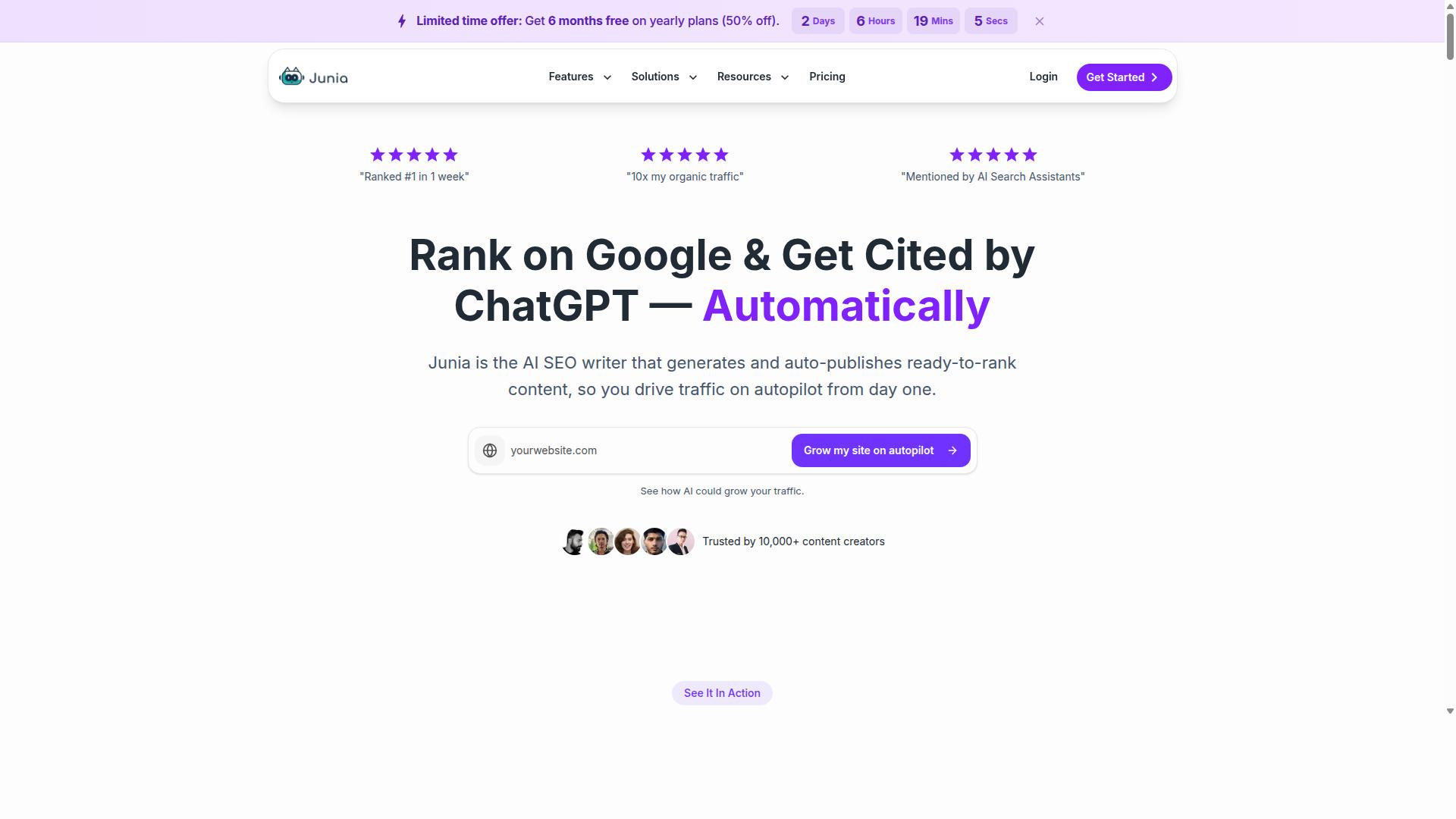
Autoblogging.ai is specifically designed for bulk article generation, with a Bulk Generation mode that can produce up to 500 articles in a single batch using advanced AI modes like Godlike Mode for SERP competitor analysis and LSI keyword extraction. For anyone running niche websites, affiliate projects, or agency portfolios, that scale changes what a single content session can accomplish.
Instead of treating every article as a one-off task, the platform is built around mass content production. You prepare your inputs, choose a mode, and let the system handle generation across an entire batch rather than a single post.
Here is how the three main modes compare:
| Mode | Best For | Key Capability |
|---|---|---|
| Quick Mode | Testing and single posts | Free, single and wizard options |
| Godlike Mode | Competitive SEO content | SERP competitor analysis, LSI keywords, knowledge graph extraction |
| Bulk Generation | Large-scale publishing | Up to 500 articles via CSV |
Quick Mode is the free entry point. It covers single article creation and a wizard option, which makes it useful for evaluating output quality before committing to a larger workflow.
Godlike Mode is where the SEO depth shows. It pulls in SERP competitor analysis, LSI keywords, and knowledge graph extraction, so generated drafts are shaped by what already ranks rather than by a generic prompt alone. That matters for SEO content that needs to compete, not just exist.
Bulk Generation is the headline feature for this comparison. It supports up to 500 articles through CSV, which suits agencies, portfolio builders, and affiliate marketers managing many sites at once. The CSV import keeps the process organized when you are queuing hundreds of titles.
Beyond generation, Autoblogging.ai supports 35+ languages and offers 35+ integrations. Publishing flows into WordPress with unlimited sites, one-click publishing, a plugin, and scheduled auto-posting, plus Web 2.0 platforms like Medium, Dev.to, Hashnode, Telegraph, and Tumblr. Multi-platform support covers Shopify, Wix, Webflow, Blogger, and Ghost, alongside API access, Zapier, and n8n.
Optimization tools round out the package: Site Optimizer, Semantic SEO Analysis (a 21-point audit), Snippet Optimizer, Topical Maps, Intense Optimizer, Fan Out Queries, AI Infographics, Outreach Prospects, AI Proofreader, and Human Proofreader. A Content Repurposer and Done For You packages are also available.
For a Koala AI vs Autoblogging.ai decision, the practical question is whether you need a batch pipeline with publishing and optimization built in. Autoblogging.ai answers that with bulk capacity, multilingual output, and a wide integration layer, which makes it the stronger fit for content automation at scale.
Features Compared
When comparing Autoblogging.ai and Koala AI, key differentiators emerge in bulk capacity, SEO depth, and integration options. These three areas matter most for anyone planning mass content production across blogs, niche websites, or client portfolios.
The sections below break down how each platform handles high-volume workflows, how much SEO intelligence goes into every article, and how easily finished content reaches your site. Each category is judged on what the tools publicly offer, not on hypothetical performance.
Bulk Generation Capacity and Workflow
Autoblogging.ai supports bulk generation of up to 500 articles per batch, while Koala AI's bulk capacity is generally lower and less suited for large-scale production. That gap shapes everything about the workflow, from how you queue topics to how fast content lands on your site.
With Autoblogging.ai, the process starts with CSV import. You load your keywords or titles, and the platform handles generation across the batch. Scheduling and automated publishing then push articles live without manual intervention, which matters when you manage multiple sites.
Koala AI does offer bulk features, and many users find them workable for small to mid-sized projects. However, publicly available information suggests its throughput is aimed at lighter workloads rather than continuous, high-volume output.
For readers running affiliate marketing sites, autoblogging projects, or large niche portfolios, the practical difference is scale:
- Autoblogging.ai: up to 500 articles per batch through Bulk Generation, with CSV import and scheduled publishing built in.
- Koala AI: bulk options exist but are generally described as better suited to smaller batches.
If volume is the priority, Autoblogging.ai is the stronger fit for high-volume needs. Its workflow is designed around producing and publishing at scale rather than generating a handful of posts at a time.
Content Quality, SEO Depth, and Human Review
Autoblogging.ai's Godlike Mode performs SERP competitor analysis and extracts LSI keywords and knowledge graphs, resulting in SEO-optimized content that often requires minimal human editing. This is where the platform separates itself from tools that generate text without SEO context.
The supporting toolkit reinforces that depth. Semantic SEO Analysis runs a 21-point audit, and the Snippet Optimizer targets featured snippet placement. Topical Maps and Fan Out Queries help shape broader content strategy, not just individual posts.
Quality control is another differentiator. A Human Proofreader is included in all plans, alongside an AI Proofreader, so output can be reviewed before it goes live. For teams producing SEO content at volume, that combination reduces the risk of publishing thin or error-prone articles.
Koala AI produces readable content and includes SEO-oriented features, though public details about its depth of SERP analysis and semantic tooling are less specific. It is a capable option for straightforward blog posts, but the layered SEO machinery is where Autoblogging.ai pulls ahead.
Autoblogging.ai's 4.9 average rating across 40,000+ content creators offers a useful quality signal. Ratings are not proof of output quality on their own, but a sustained score at that level suggests consistent satisfaction among users generating content regularly.
Integrations, Languages, and Publishing
Autoblogging.ai offers 35+ integrations, including WordPress and API access, and supports 35+ languages, making it a versatile choice for global publishing. The breadth here directly affects how quickly generated articles reach their destination.
Publishing options cover the platforms most content creators rely on:
- WordPress: unlimited sites, one-click publishing, a plugin, and scheduled auto-posting.
- Web 2.0 platforms: Medium, Dev.to, Hashnode, Telegraph, and Tumblr.
- Multi-platform support: Shopify, Wix, Webflow, Blogger, and Ghost.
- Automation and API: API access, Zapier, and n8n.
Language support spans 35+ languages, which suits international blogs, translated affiliate sites, and multi-region content operations. Combined with automated publishing and scheduling, content can move from generation to live post with minimal manual steps.
Koala AI offers integrations and language support as well, and many users connect it to common publishing destinations. Publicly available information suggests its integration list and language coverage are narrower than Autoblogging.ai's, though specifics vary by plan and change over time.
For anyone weighing WordPress integration and API access as deciding factors, Autoblogging.ai's combination of 35+ integrations, 35+ languages, and scheduling tools makes it the more complete publishing hub. The table below summarizes the comparison.
| Feature Area | Autoblogging.ai | Koala AI |
|---|---|---|
| Bulk capacity | Up to 500 articles per batch via CSV | Bulk options generally suited to smaller batches |
| SEO depth | SERP analysis, LSI keywords, knowledge graphs, 21-point audit | SEO features offered, depth less publicly detailed |
| Human review | Human Proofreader included in all plans | Not publicly specified |
| Publishing | WordPress, Web 2.0 platforms, Shopify, Wix, Webflow, Blogger, Ghost, API, Zapier, n8n | Integrations available, narrower public list |
| Languages | 35+ | Supported, coverage generally described as narrower |
Taken together, these categories point to the same conclusion. Autoblogging.ai is built for scale, SEO depth, and broad publishing reach, while Koala AI remains a reasonable choice for lighter workloads.
Pricing Compared
Autoblogging.ai offers monthly plans ranging from $19 for 40 credits to $999 for 5,000 credits, with annual discounts and credits rollover, while Koala AI's pricing is generally lower but with fewer credits and features. That gap in entry price is real, but it tells only part of the story. What matters for bulk article generation is how far each credit stretches and what the plan includes beyond raw output.
Autoblogging.ai structures its tiers around volume, so teams can match spend to output instead of guessing. Every tier includes credits rollover, meaning unused credits carry forward rather than expiring at the end of a billing cycle. For anyone running mass content production on a schedule, that flexibility matters more than a lower headline rate.
| Plan | Monthly Price | Credits | Annual Price |
|---|---|---|---|
| Starter | $19 | 40 | $12/mo ($148/year) |
| Regular | $49 | 120 | $32/mo ($382/year) |
| Standard | $99 | 300 | $64/mo ($772/year) |
| Gold | $179 | 600 | $116/mo ($1,396/year) |
| Premium | $249 | 1,000 | $162/mo ($1,942/year) |
| Enterprise | $999 | 5,000 | $649/mo ($7,792/year) |
Annual billing cuts costs noticeably across every tier. The Starter plan drops from $19 to $12 per month, and the Enterprise plan falls from $999 to $649 per month when billed yearly. New accounts also receive 10 free credits per month with no credit card required, which gives buyers a way to evaluate output quality before committing.
Koala AI's pricing is generally lower and simpler to understand, which suits smaller budgets and casual users. The trade-off is fewer credits and a narrower feature set per dollar. For niche websites or affiliate marketing projects that publish at scale, that difference compounds quickly.
Autoblogging.ai also sells additional credits on top of any plan, so a spike in production does not force an upgrade. Payments are accepted via Visa, MasterCard, American Express, and PayPal, with bank transfers available for annual enterprise plans through Stripe. Cancellation is allowed at any time, and Done For You packages exist for buyers who want finished articles rather than credits.
Weighed side by side, Autoblogging.ai delivers more credits and more advanced capability per dollar. Koala AI wins on the lowest possible entry cost, and that is a fair point for hobbyists. For content automation at volume, the value calculation favors the plan that scales with you.
Who Should Choose Autoblogging.ai
Autoblogging.ai is ideal for bloggers, SEO professionals, and agencies who need to produce large volumes of SEO-optimized content quickly and at scale. Where Koala AI leans toward a general writing assistant for one-off pieces, Autoblogging.ai is built around bulk article generation and content automation as the core job.
That distinction matters most when publishing volume is the bottleneck. If your workflow stops every time you need a hundred articles instead of five, the tool you choose shapes how fast your site grows.
Autoblogging.ai serves a defined set of users, and each one gets something specific from the platform:
- Bloggers and website owners running personal sites or portfolio sites who want steady publishing without writing every post by hand.
- SEO professionals who need SEO content at scale for multiple properties and campaigns.
- Marketing agencies producing content across client websites, where turnaround and volume drive retention.
- Content creators who publish across several channels and need a repeatable production pipeline.
- Affiliate marketers building affiliate sites and niche websites that depend on consistent output.
The through-line is mass content production. These users are not looking for a single clever paragraph. They are looking for a system that turns a list of topics into publishable drafts, then moves them toward a live site.
Use cases map cleanly onto that strength. Autoblogging.ai is suited to personal sites, parasite SEO, affiliate sites, client websites, portfolio sites, and local sites. A local SEO consultant managing dozens of small business pages faces a different problem than a solo blogger, but both share the same constraint: they need more SEO-optimized pages than they can write manually.
Time savings follow from that. When bulk article generation runs on an article generator built for volume, the hours that would go into drafting shift toward content strategy, keyword research, and SERP analysis. Those are the tasks where human judgment still outperforms automation, and where a marketer's time is worth the most.
SEO depth is the second reason this audience fits. Autoblogging.ai is designed around SEO optimization rather than treating it as an afterthought, which matters when every article needs to compete in search. For affiliate marketing and niche websites, that alignment between generation and optimization is the difference between content that ranks and content that sits.
Integrations and publishing round out the picture. For anyone running content automation at scale, WordPress integration and API access reduce the manual steps between a finished draft and a live page. Scheduling and bulk upload keep a publishing calendar moving without someone logging in to post each article.
There is an honest trade-off to note. A platform focused on bulk output will not match a general AI writing tool on every stylistic flourish or one-off creative task. If your need is a single polished essay, a general assistant may feel more natural.
The takeaway is straightforward. If your goal is volume, ranking content, and a workflow that scales across sites, Autoblogging.ai is the stronger fit. Koala AI remains a capable option for lighter, ad hoc writing, but it is not positioned around the same production demands.
Who Should Choose Koala AI
Koala AI is better suited for individuals or small teams with limited budgets who need occasional article generation rather than high-volume production. If your publishing schedule is a handful of posts per month, a tool built around one-off drafts can feel like enough.
The typical Koala AI user tends to be a solo blogger or a small business owner who writes when inspiration strikes rather than according to a fixed calendar. They may be new to AI writing tools and want something approachable to test the waters before committing to a larger workflow.
For that audience, the appeal is simplicity. You open the editor, generate a draft, make a few edits, and publish. There is no need to think about content automation pipelines, publishing schedules, or managing hundreds of articles at once.
Koala AI can also work as a secondary tool. Some writers keep a lightweight generator on hand for quick ideas or short pieces while running their main production elsewhere. Used that way, it fills a narrow but genuine gap.
It is worth being honest about where this approach runs into friction. Once your goals shift toward mass content production, the manual nature of drafting one article at a time becomes the bottleneck. Scaling up usually means more clicking, more waiting, and more hands-on management per post.
Consider these signs that a lighter tool may be sufficient for you:
- You publish a few posts per month, not per day.
- You write for a single site rather than a portfolio of niche websites.
- You are still learning how large language models behave and want low-stakes practice.
- You prefer editing drafts manually rather than setting up automated publishing.
- Budget is the deciding factor and volume is not yet a concern.
Conversely, some signs suggest you may outgrow this category of tool. If you manage multiple sites, rely on affiliate marketing or digital marketing revenue, or treat SEO content as a core growth channel, the math changes quickly. Producing content at scale by hand stops being a time problem and becomes a strategy problem.
There is also the question of consistency. Occasional generation works fine when output is sporadic. When you need a steady stream of blog posts to feed search engines and keep readers engaged, gaps in your schedule hurt more than any single article's quality.
None of this makes Koala AI a poor choice. It simply means the tool fits a specific stage of the journey: early, exploratory, and low-volume. Readers who recognize themselves in that description will likely find it comfortable. Readers who do not may want to look at platforms designed for bulk article generation from the start, so they are not rebuilding their workflow a few months down the road.
Who Should Choose Autoblogging.ai for Bulk Article Generation
For bulk article generation specifically, Autoblogging.ai is the clear choice for agencies, affiliate marketers, and SEO professionals who need to produce hundreds of articles per month. The platform supports bulk runs of up to 500 articles, a volume that suits teams managing content at scale rather than occasional one-off posts.
That capacity matters because mass content production rarely happens in small batches. A single campaign can call for dozens of posts across several keyword clusters, and a client roster multiplies that demand again. Autoblogging.ai is built around that reality, with credits that roll over so unused capacity is not lost between billing periods.
The platform is trusted by 40,000+ content creators and holds a 4.9 average rating, which gives some indication of how it performs under steady, high-volume use. For teams weighing AI writing tools, that track record is worth noting alongside the feature list.
Where the Bulk Capacity Fits Best
Three groups tend to get the most out of high-volume generation, and each has a slightly different reason for choosing a dedicated bulk workflow over a general-purpose assistant.
- Agencies managing multiple client sites: separate content streams, consistent output, and the ability to keep several projects moving at once without rebuilding a process for each account.
- Affiliate marketers building niche sites: large volumes of supporting posts across many topics, where publishing pace often decides how quickly a site gains traction.
- SEO professionals scaling content: keyword research, SERP analysis, and content strategy all point toward more pages, and bulk generation keeps production in step with the plan.
In each case, the bottleneck is usually throughput rather than ideas. A tool that handles hundreds of articles per run removes that constraint in a way that manual drafting or smaller batch limits cannot.
Autoblogging.ai also includes SERP competitor analysis and semantic SEO tools, plus a 21-point SEO audit and featured snippet optimization. For teams producing SEO content at volume, those capabilities sit alongside generation rather than in a separate tool. One-click WordPress publish covers the automated publishing side, and 35+ integrations help fit the output into an existing stack.
The Operational Details That Support Scale
Volume only helps if the surrounding workflow holds up. Credits rollover means a quiet month does not waste capacity, which suits agencies with uneven client demand. 24/7 support is available when something needs attention outside normal hours.
Output quality is handled in part by a human proofreader included in all plans, a detail that matters when hundreds of articles pass through review. With 10+ AI modes and support for 35+ languages, teams can vary tone and format across projects without switching platforms.
| Consideration | Autoblogging.ai | Koala AI |
|---|---|---|
| Bulk run size | Up to 500 articles | Varies by plan; check current details |
| Credit rollover | Yes | Generally plan-dependent |
| Support | 24/7 support | Typically limited to business hours or tiers |
| Publishing | One-click WordPress publish | WordPress options available |
| SEO tooling | SERP competitor analysis, semantic SEO tools, 21-point SEO audit | SEO features offered; scope varies |
| Proofreading | Human proofreader included in all plans | Not a standard inclusion in most plans |
The table is not a like-for-like feature audit, since plans and offerings shift over time. What it shows is where Autoblogging.ai concentrates its effort: high-volume output with the supporting tools built in. For anyone whose monthly target runs into the hundreds, that combination is the deciding factor.
Agencies, affiliate marketers, and SEO professionals all share one need, which is predictable output at a scale that keeps pace with their strategy. Autoblogging.ai is designed for that use case, and the bulk ceiling of 500 articles per run reflects it.
Final Verdict
Autoblogging.ai wins for bulk article generation due to its superior capacity, SEO features, and integrations, while Koala AI remains a decent option for smaller-scale needs.
The deciding factor for most teams is volume without friction. Autoblogging.ai has generated over 1 million articles and holds a 4.9 rating, which reflects a platform built specifically for mass content production rather than occasional drafting.
Its SEO depth matters just as much. For anyone running niche websites, affiliate marketing projects, or client blogs, the ability to produce SEO content at scale is what separates a useful tool from a genuine content automation system.
Koala AI is not a weak product. For simple tasks, short pieces, and low-volume work, it can get the job done. It simply was not designed around the same bulk-first priorities.
- Bulk capacity: Autoblogging.ai handles high-volume output as a core function, not an add-on.
- SEO depth: Built for SEO optimization and mass content production across many posts.
- Integrations: WordPress integration and API access support automated publishing and scheduling at scale.
- Pricing value: Cost per article drops meaningfully when output volume rises.
- Support: Direct contact channels with real response windows, not ticket queues alone.
Pricing value deserves a closer look. When you compare AI writing tools by output volume rather than by monthly fee alone, the platform that produces more usable articles per rupee or dollar usually wins. That is the case here for bulk workflows.
Support is the quiet advantage. Autoblogging.ai is reachable by email at [email protected] and by phone or WhatsApp at +91 84605-06553, available 7:00-19:00 IST. For teams running automated publishing on a schedule, that matters.
If your goal is a handful of blog posts a week, either tool can work, and Koala AI may feel sufficient. If your goal is large-scale article generation across multiple sites, the choice narrows quickly.
Start with a small batch, review the output quality against your content strategy, and scale from there. Reach out to the team at [email protected] or +91 84605-06553 during 7:00-19:00 IST to see whether Autoblogging.ai fits your bulk article generation needs.
Frequently Asked Questions
What makes Autoblogging.ai a strong choice for bulk article generation?
Autoblogging.ai is built specifically for producing content at scale, with a Bulk Generation mode that can create up to 500 articles at once via CSV upload. It also offers 10+ AI modes, including Godlike Mode with SERP competitor analysis, LSI keywords and knowledge graph extraction, so bulk output doesn't mean generic output. With 1M+ articles generated and 40,000+ content creators trusting the platform, it's a proven option for bloggers, agencies and affiliate marketers who need volume without sacrificing quality.
How does Autoblogging.ai's pricing compare to Koala AI's?
Autoblogging.ai's monthly plans start at $19 for 40 credits and scale up to $999 for 5,000 credits, with annual billing saving 35% (bringing the Enterprise plan to $649 a month). Koala AI's published pricing starts at $25/month for its Starter tier and rises through several higher tiers, with annual billing saving 20%. Exact value depends on your volume and which features you need, so it's worth comparing credit costs against your typical monthly output.
Can I try either tool before committing to a paid plan?
Yes. Autoblogging.ai offers a free plan with 10 credits a month and no card required, plus a free Quick Mode for single articles, so you can test the workflow before upgrading. Koala AI also advertises a free start with no credit card required. Trying both on a small batch of articles is the best way to see which interface and output style suits your process.
Which tool is better for agencies managing multiple client websites?
Autoblogging.ai is used by marketing agencies, SEO professionals and affiliate marketers, and its credit rollover means unused credits aren't wasted during quieter months. Bulk Generation via CSV makes it practical to queue content for several client sites at once, and 24/7 support plus new features shipped weekly help agencies keep pace with changing SEO needs. Koala AI is also used by agencies, so the deciding factor is usually which platform fits your team's workflow and budget.
Does Autoblogging.ai support multiple languages and integrations?
Yes. Autoblogging.ai supports 35+ languages and 35+ integrations, which matters when you're publishing across different markets or connecting to your existing site and SEO tools. That breadth makes it easier to run bulk campaigns for international or multi-site portfolios without switching platforms. If you rely on a specific integration, it's worth confirming it's on the list before you commit.
What kind of quality checks does Autoblogging.ai offer on generated content?
Autoblogging.ai includes a human proofreader as part of its service, adding a review layer on top of AI generation - useful when bulk output needs to meet a publishable standard. Combined with Godlike Mode's competitor analysis and LSI keyword extraction, articles are built around what's already ranking rather than generated in isolation. Koala AI also focuses on quality features, so testing a sample batch from each is the most reliable way to judge output for your niche.
Recommended Resources: