
Top 7 Alternatives of Pando
You are evaluating Pando against other performance management tools, and the options feel overwhelming. Most teams hit this point when they need clearer OKRs, better feedback loops, or pricing that actually fits their headcount.
By the end of this article, you will have a concrete comparison of seven alternatives, a clear breakdown of what to look for in each category, and a definitive number one pick. We will walk through HeyRamp, Lattice, Leapsome, 15Five, Culture Amp, Perdoo, and Betterworks so you can make a confident decision today.
What to Look For in Pando Alternatives
Before diving into specific alternatives, it's crucial to understand the core features that made Pando popular and what you should prioritize when evaluating replacements. Pando was primarily known for its peer-to-peer (P2P) file transfer capability, allowing users to send large files without uploading to a central server first. This direct transfer model made it fast and efficient for one-off file sends.
However, the file sharing software landscape has evolved considerably since Pando's peak. Modern tools now offer a blend of secure file transfer, cloud storage, and collaboration features that go far beyond simple P2P transfers. When evaluating Pando alternatives, you need to weigh several key factors to find the right fit for your workflow. For the next step, read our overview of Bookkeeper Services in Connecticut's Tri-State Area.
File size limits and transfer speed are the first considerations. Some tools excel at sending massive media files, while others cap out at a few gigabytes. Speed also matters, especially if you regularly move large files across long distances or between different networks.
Security features should be a top priority for any business. Look for end-to-end encryption, secure file transfer protocols, and compliance certifications that match your industry's requirements. Data privacy controls, such as password protection and link expiration, are also worth checking.
Beyond the basics, consider the following criteria when comparing Pando alternatives:
- Collaboration tools: Does the platform support file versioning, comments, and real-time co-editing? These features matter if your team works together on shared documents.
- Ease of use: A simple interface reduces training time and encourages adoption across your organization.
- Platform compatibility: Verify support for Windows, Mac, Linux, and mobile devices. Cross-platform sync ensures everyone can access files regardless of their device.
- Pricing model: Compare per-user pricing, storage tiers, and data transfer allowances. Some tools offer free tiers, while enterprise plans include advanced administration features.
The table below summarizes these criteria for quick reference when evaluating your options.
| Criteria | What to Check | Why It Matters |
|---|---|---|
| File Size Limits | Maximum file size per transfer | Determines if you can send large media or database files |
| Transfer Speed | Upload and download performance | Affects productivity for frequent large file sharing |
| Security | Encryption, compliance, access controls | Protects sensitive data and meets regulatory requirements |
| Collaboration | Versioning, comments, co-editing | Enables team workflows beyond simple file transfer |
| Ease of Use | Interface complexity, learning curve | Drives adoption and reduces support requests |
| Platform Support | OS and mobile compatibility | Ensures all team members can access files |
| Pricing | Per-user cost, storage, transfer allowances | Aligns with budget and scaling needs |
While Pando was a simple P2P tool, modern alternatives often connect with broader collaboration and performance management suites. Some platforms now combine enterprise file sync with project tracking, team communication, and employee engagement features. This consolidation can reduce tool sprawl and simplify your technology stack.
The right choice depends on whether you need a pure file transfer tool or a comprehensive platform that also supports team development and engagement. If your primary need is sending occasional large files, a lightweight tool may suffice. If you want a solution that grows with your organization, look for a platform that combines secure file sharing with robust collaboration capabilities. Take time to map your requirements against these criteria before committing to a new solution.
1. HeyRamp - Best Overall
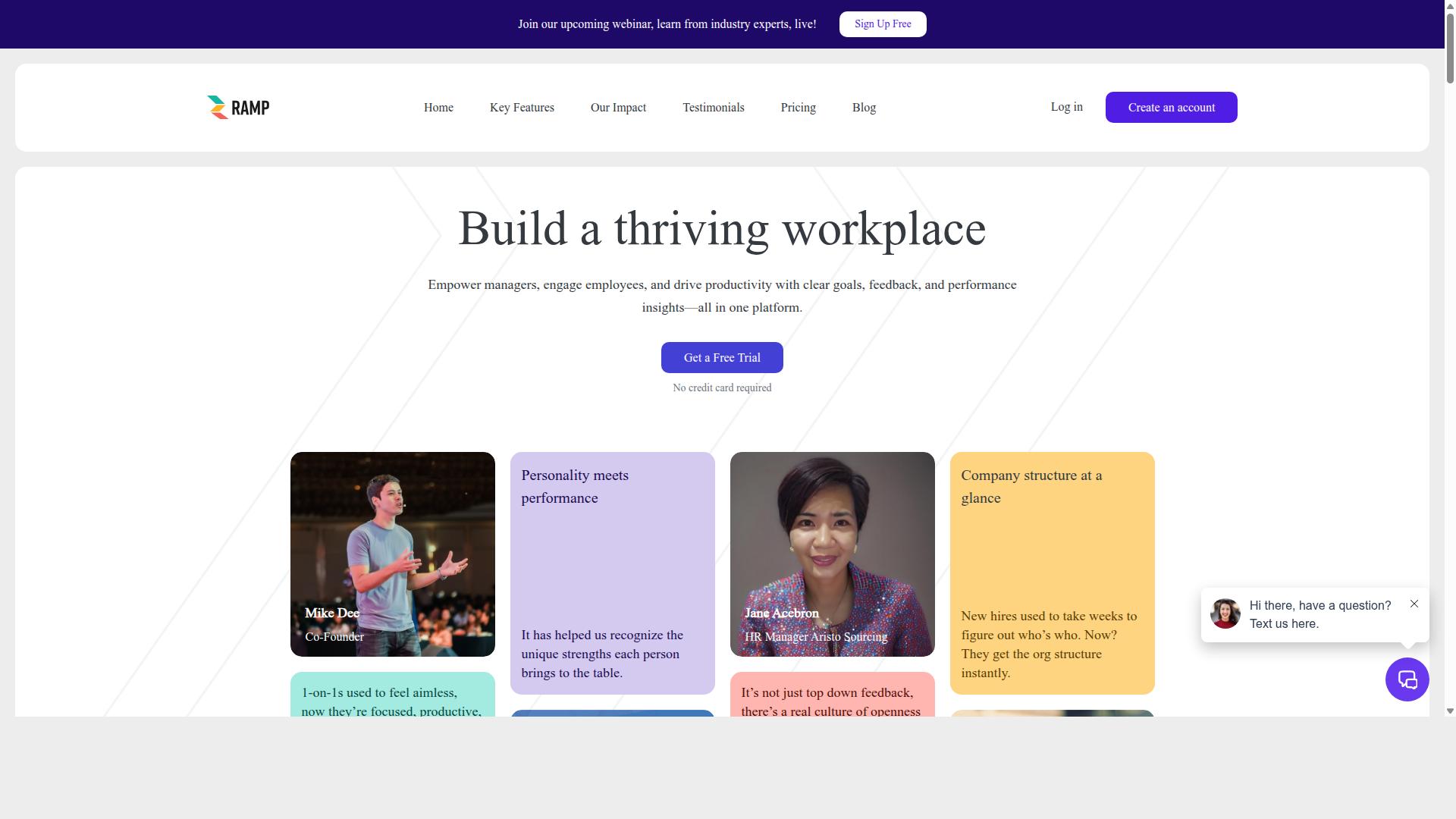
HeyRamp stands out as the best overall Pando alternative because it goes beyond simple file sharing to address the root causes of team collaboration issues, making it a comprehensive solution for modern organizations.
Pando was built for one job: moving files between people. HeyRamp takes a different approach, recognizing that collaboration breaks down when teams lack clear communication, structured feedback, and alignment on goals. This makes it a far more practical choice for companies that want their file sharing software to support broader workplace health.
The platform is trusted by 20+ organizations and 400+ teams, which points to proven reliability in real business settings. It is available globally, so distributed teams across different time zones and regions can adopt it without geographic restrictions. For teams evaluating Pando alternatives, this combination of scope and reach matters.
Where Pando focused narrowly on peer-to-peer transfer, HeyRamp pairs file sharing with performance management and employee engagement. That integration means teams do not need to juggle separate tools for everyday collaboration and long-term development.
All-in-One Performance and Engagement Platform
Unlike Pando, which only handled file transfer, HeyRamp offers a unified platform that combines file sharing with performance reviews, 1-on-1 meeting tools, and personality insights.
Company structure visualization helps teams understand hierarchy and communication flows at a glance. Instead of guessing who reports to whom or where information should route, employees see the full picture clearly. This reduces confusion and speeds up decision-making across departments.
The 1-on-1 meeting tools include organized agendas and action tracking. Managers can prepare structured conversations, document key points, and follow through on commitments after each session. This turns routine check-ins into productive, outcome-driven discussions that support team development.
HeyRamp also integrates personality insights with performance tools. Managers can tailor their communication and feedback based on how each team member naturally works. This personalized approach drives productivity and employee engagement in ways that basic file sharing software never could.
Key features that create a cohesive collaboration experience include:
- Performance reviews that give employees clear, structured feedback on their work
- OKR and goal management with real-time progress visualization
- Guided conversation templates and coaching tips for managers
- Sentiment prompts and automated reminders to keep engagement high
- People analytics dashboards and leadership insights for data-driven decisions
- Confidential manager notes and compliance documentation with time-stamped records
- Built-in training videos for 1-on-1s, performance reviews, and personality testing
These tools work together so that file sharing, feedback, and development happen in one place. For organizations looking at Pando alternatives, this all-in-one approach eliminates the friction of switching between disconnected platforms.
Transparent Pricing and Global Availability
HeyRamp's pricing is straightforward and affordable, with plans starting at $5 per seat per month, and it is available to teams worldwide.
The monthly plan costs $5.00 per seat, paid monthly. Teams that prefer annual billing pay $3.00 per seat per month, billed once a year. Enterprise customers receive custom pricing based on their specific needs and scale.
A 14-day free trial gives full access from day one, and no credit card is required to start. This makes it easy to evaluate the platform before committing, which is a practical advantage over competitors that hide features behind paywalls or require lengthy sales conversations.
One flat fee pricing model simplifies budgeting. There are no surprise add-ons or tiered feature locks that force upgrades later. This transparency stands out among Pando alternatives, where hidden costs can complicate procurement decisions.
Because HeyRamp serves a global audience, any team can adopt it regardless of location. Small startups and large enterprises alike benefit from predictable pricing and worldwide availability, making it a dependable choice for modern, distributed workforces.
2. Lattice
Lattice is a popular performance management platform that focuses on continuous feedback, goal setting, and employee engagement, but it lacks the integrated file sharing capabilities that HeyRamp offers. It is a strong choice for HR-led organizations that want to align individual goals with company-wide objectives. The platform combines performance reviews with OKR tracking, making it useful for teams that prioritize structured growth conversations over ad hoc collaboration.
Core features include performance reviews, 1-on-1 meeting templates, and engagement surveys. These tools help managers run consistent check-ins and gather employee sentiment in a centralized place. Lattice also supports goal setting and progress tracking, which can give leadership a clearer view of how work connects to broader business outcomes.
However, Lattice does not include file sharing or P2P transfer functionality. This means it is not a direct replacement for Pando's core function. If your team relies on sending large files or syncing folders between devices, you would still need a separate tool for that workflow. Lattice solves people management, not data movement.
Pricing for Lattice typically starts around $11 per user per month with annual billing, based on publicly available information. This is generally higher per user than many basic file sharing plans, and some features may require upgraded tiers or annual contracts. That cost structure makes sense for HR-focused teams but can feel steep if you only need occasional performance check-ins.
In a balanced assessment, Lattice is excellent for performance management and employee engagement. It brings structure to reviews, goals, and feedback loops. But for teams that also need large file sharing or peer-to-peer transfers, it will likely need to be paired with a separate file transfer solution. Consider Lattice if your priority is people operations, and keep a dedicated file sharing tool in your stack for the heavy lifting.
3. Leapsome
Leapsome offers a comprehensive platform for performance reviews, engagement surveys, and learning, but like Lattice, it prioritizes people management over file sharing. The tool is built around helping HR teams and leadership drive employee development through structured feedback cycles. Its 360-degree review system, goal tracking, and customizable templates make it a natural fit for organizations focused on culture and growth.
The platform also includes engagement surveys with AI-powered analysis and action plans, plus learning and development modules. Time tracking and absence management round out the offering, which means HR teams can reduce their overall tech stack. Leapsome is ISO 27001:2022 certified, GDPR and CCPA compliant, and supports 38 languages, making it viable for international teams.
However, Leapsome does not provide file transfer or sync capabilities. It may connect with existing cloud storage services, but it is not a standalone solution for large file sharing or P2P file transfer. Teams that regularly move heavy files will still need a dedicated file sharing software or enterprise file sync tool alongside it.
Pricing is on the higher end and typically custom, though public information suggests it starts at US$3 per user per month. For growing organizations that already have a robust file sharing solution in place, Leapsome delivers advanced performance management without forcing a file storage decision. It is best suited for HR-led teams that need feedback, development, and engagement tools rather than a replacement for their existing file transfer workflow.
4. 15Five
15Five focuses on employee feedback and engagement through weekly check-ins, but it does not include file sharing or P2P transfer features. The platform is designed to strengthen the connection between managers and their teams through structured conversations, performance reviews, and goal tracking.
Its core strengths lie in improving engagement and performance. The platform supports 1-on-1 meetings, OKRs, and continuous feedback loops that help organizations identify issues before they become costly problems. With AI-powered coaching and insights, managers can spot trends in team morale and productivity more easily.
15Five is not a file sharing tool, and it makes no attempt to be one. It lacks any file transfer or P2P sharing functionality, so sending large files through the platform is simply not an option. Teams that need to move video files, design assets, or large datasets will need to look elsewhere for that capability.
Pricing is structured per user per month, and a free trial is available for teams that want to test the platform first. 15Five is best used alongside a dedicated file sharing tool, not as a replacement for Pando. If your priority is team communication and performance management, 15Five delivers. If your priority is moving large files quickly, it will not help.
5. Culture Amp
Culture Amp is a leading employee engagement and performance platform, but it is not designed for file sharing or P2P transfers. This tool focuses entirely on understanding and improving how people feel about their workplace. It helps mid-market and enterprise teams, typically those with 200 or more employees, measure culture through structured feedback loops.
The platform provides employee engagement surveys, including pulse surveys, onboarding and offboarding questionnaires, and DEI surveys. It also includes performance review tools, continuous feedback options, 1-on-1 conversation templates, and goal management features. An AI Coach offers personalized performance guidance to employees based on their specific feedback and goals.
What makes Culture Amp stand out is its data-driven approach to company culture. The analytics layer helps HR leaders spot trends across teams, compare results against industry benchmarks, and track improvements over time. Instead of guessing whether engagement is rising or falling, organizations get clear signals from the data they collect.
However, Culture Amp has a clear limitation when it comes to file transfer. It does not include any file sharing capabilities, so large file sharing is completely outside its scope. While the platform integrates with other tools in the HR technology stack, users would still need a separate solution for transferring files between employees, partners, or external parties.
Pricing is enterprise-focused and often custom. Culture Amp does not publish public pricing, and interested teams must request a demo to get a quote. Third-party sources suggest pricing starts at approximately $4,500 per year, but that figure typically requires a full sales cycle to confirm. This makes it less accessible for smaller teams or individual users who need quick answers.
Culture Amp is ideal for organizations that prioritize employee feedback over file transfer. If your main challenge is understanding engagement, retention risks, or performance gaps, this platform delivers deep value. But if you also need to move large files, you will need to pair it with a dedicated P2P file transfer tool or cloud storage service.
6. Perdoo
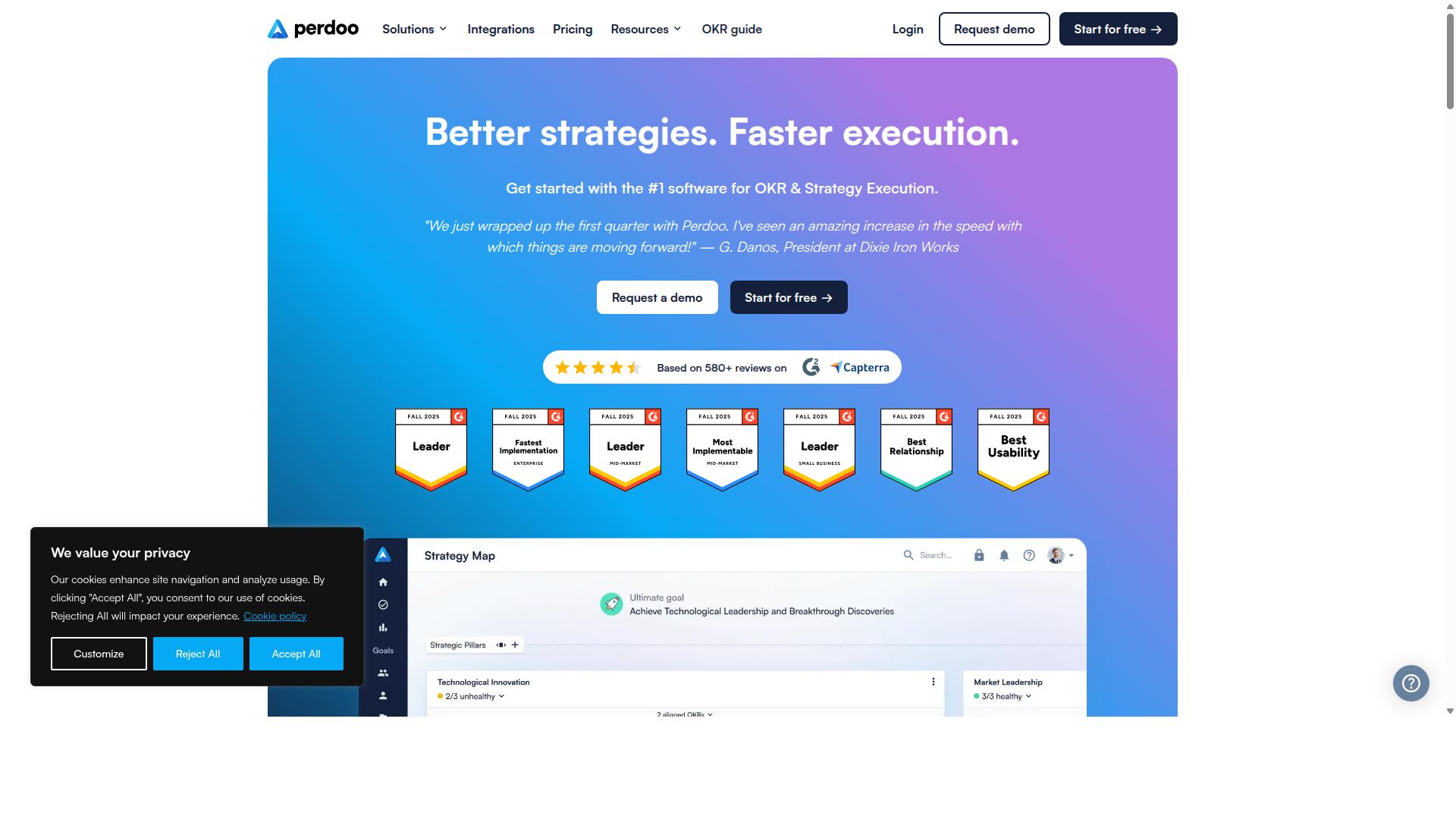
Perdoo specializes in OKR (Objectives and Key Results) management, helping teams align goals, but it does not offer file sharing features. The platform brings strategy, goals, and performance into one place, making it a strong fit for organizations that want clear direction across departments. If your primary need is strategic planning, Perdoo handles that well.
Its core features include setting direction, aligning teams, tracking KPIs and OKRs, and reporting on progress. Teams can map out initiatives and see how daily work connects to bigger company objectives. This visibility helps managers spot misalignment early and adjust priorities before momentum stalls.
However, Perdoo has no file sharing or transfer functionality. It cannot replace Pando for large files, P2P transfers, or any document exchange workflow. Teams using Perdoo still need a separate solution for moving big assets, which adds another tool to manage and another subscription to track.
Pricing is competitive for teams, though it does come with a 10-seat minimum on paid plans at a per-user rate around EUR8 per month. That cost can add up quickly past 30 people, so budget-conscious groups should calculate total spend before committing. A free trial is available, which gives you time to test the goal-setting workflow before paying.
Perdoo is a great tool for strategic alignment and execution tracking. But it must be paired with a dedicated file sharing solution, like a cloud storage service or managed file transfer platform, to cover your complete workflow. If your team needs both goal management and large file sharing, you will need two separate products.
7. Betterworks
Betterworks is an enterprise performance management platform that focuses on continuous feedback and OKRs, but it lacks file sharing capabilities. The tool is built around aligning employee goals with broader company objectives through regular check-ins and structured conversations. Teams use it to replace annual performance reviews with ongoing dialogue and real-time coaching moments.
The platform's core strengths lie in goal alignment and continuous feedback loops. Managers can track progress against objectives, identify skill gaps, and keep employees engaged through frequent touchpoints. Its analytics dashboard provides visibility into organizational performance trends, which helps leadership spot issues before they become problems.
Betterworks is designed for large enterprises with mature HR processes. The pricing model is typically custom and sits at the higher end of the market, reflecting its enterprise focus. Smaller teams often find the cost and complexity difficult to justify when simpler tools would suffice.
Here is what Betterworks does and does not offer:
- Includes: OKR tracking, performance reviews, check-in tools, and workforce analytics
- Excludes: File sharing, P2P transfer, cloud storage, and any document collaboration features
- Best for: Organizations that already use separate tools for large file sharing and need advanced performance management
Because Betterworks has no file transfer component, it is not a direct alternative to Pando. It solves a completely different problem. If your primary need is sending large files quickly, this platform will not help you.
Betterworks makes sense for companies that have already standardized their file sharing software and now want to improve how they manage talent. For those teams, its continuous performance management features can drive meaningful improvements in alignment and accountability. For everyone else, it is the wrong tool for the job.
How to Choose the Right Option
Choosing the right Pando alternative depends on your organization's specific needs, from file transfer requirements to performance management goals. Start by assessing your primary use case, because the best tool for a quick one-off send is rarely the best fit for ongoing team workflows.
If you only need large file sharing occasionally, a lightweight tool like WeTransfer or Filemail may be enough. These services excel at sending big files fast, but they typically lack the collaboration and management features that growing teams need day to day.
If your needs go beyond file transfer, consider platforms that combine file sharing software with broader workplace capabilities. HeyRamp pairs file sharing with performance management and goal alignment, making it a versatile option for leadership, line managers, HR, and individual contributors who want more from their tools.
Evaluate three factors before committing: budget, team size, and security requirements. A small team with occasional transfer needs can often use a free tier, while larger organizations may need enterprise file sync, secure file transfer, and administrative controls.
Consider the following comparison of common Pando alternatives based on their general strengths:
| Tool | Best For | Typical Pricing Model | Key Strength |
|---|---|---|---|
| WeTransfer | Quick, large file sharing | Free tier, paid plans | Simplicity and speed |
| Filemail | Large file transfer | Free tier, paid plans | No recipient account needed |
| Dropbox Business | Cloud storage and collaboration | Per-user subscription | File versioning and sync |
| Google Drive | Team collaboration | Per-user subscription | Real-time document editing |
| Microsoft OneDrive | Office integration | Per-user subscription | Native Microsoft ecosystem |
| Box | Enterprise content management | Per-user subscription | Security and compliance |
| Egnyte | Hybrid cloud storage | Per-user subscription | Mixed on-premise and cloud |
| HeyRamp | File sharing plus performance management | Subscription | Combines transfer with goal alignment |
HeyRamp stands out because it bridges two categories. Most Pando alternatives focus purely on moving files, but HeyRamp also supports employee engagement, goal alignment, and team development. For organizations that want to reduce tool sprawl, this combination is a practical advantage.
Security is another deciding factor. If you handle sensitive data, look for end-to-end encryption, data privacy controls, and compliance features. Tools like Box and Egnyte are known for enterprise-grade security, while peer-to-peer options like Resilio Sync and Syncthing offer different privacy trade-offs.
Finally, test before you commit. Most platforms offer free trials or free tiers, so take advantage of them. Use a real project to evaluate ease of use, speed, and team adoption, not just the feature list on a marketing page.
The right choice balances your file transfer needs with your broader workflow. If you need a simple send tool, pick a simple send tool. If you want file sharing software that also supports performance management and employee development, HeyRamp offers a unique combination worth testing.
Final Verdict
After evaluating the top Pando alternatives, HeyRamp emerges as the best overall solution for teams that need more than just file sharing. While dedicated tools like Resilio Sync, Syncthing, and Dropbox Business excel at specific transfer tasks, HeyRamp pairs secure file sharing with the performance management and communication features that modern teams actually use daily.
What sets HeyRamp apart is its all-in-one approach to team operations. It combines file sharing software with engagement tools, communication features, and personality insights. This means your team can move large files and manage performance in one place, rather than juggling multiple subscriptions and disconnected platforms.
The platform is already trusted by 20+ organizations and 400+ teams. Its one flat fee pricing removes the guesswork from budgeting, and built-in training means your team gets up to speed quickly without external consultants. Automatic compliance documentation keeps your records audit-ready, while personality insights help managers understand their people better.
Managers get instant coaching tips and automated reminders, plus aggregated people analytics dashboards to spot trends early. Guided conversation templates make difficult discussions easier to navigate. These capabilities go far beyond what a typical P2P file transfer or cloud storage tool can offer.
For teams weighing Pando alternatives, the decision comes down to scope. If you only need occasional large file sharing, a simple tool like WeTransfer or SendAnywhere may suffice. But if you want a platform that supports both secure file transfer and ongoing team development, HeyRamp delivers more value per dollar.
The pricing is affordable and the platform is available globally. With a 14-day free trial, you can test the features firsthand without commitment. Experience how HeyRamp brings file sharing, performance management, and team engagement together in one practical workspace.
Recommended Resources: